Your haircut does not expire all at once. It expires from the back forward. The neckline a barber shapes so carefully in Monroe will soften, fuzz, and creep within about two weeks, while the top of the same cut still has weeks of life left. Organizing your year around that fact, rather than discovering it in a photograph of the back of your own head, is what this calendar is for. It lays out when the neck needs attention across the year, and why the seasons change the schedule.
How a neckline ages
A shaped neckline is a line drawn against growth. Hair emerges at about half an inch a month, at the nape it grows in mixed directions, and collar friction roughs up what is there. The result follows a reliable arc: crisp for the first week, acceptable through the second, visibly soft in the third, and by the fourth the back view belongs to a man who is overdue, whatever the mirror told him about the front. The clean-up exists to reset that clock cheaply, in minutes, without touching the rest of the cut.
| Season | Neck schedule | What the season does to the neck |
|---|---|---|
| Spring | Clean-up at the midpoint of your cut cycle | Pollen season means more showers and more collar changes; a tidy neck keeps a normal cycle looking deliberate |
| Early summer | Clean-up every 2 weeks if you wear short cuts | Heat and sweat make long neck hair itchy and trap grime; shorter cycles pay off in comfort |
| Mid-to-late summer | Keep the 2-week rhythm; check for sun irritation | Sun on a freshly cleaned neckline can burn; a hat or sunscreen matters after clean-ups on pool and lake weekends |
| Fall | Midpoint clean-ups; add one before holiday photos begin | Event season starts; the back of your head appears in other people's pictures more than at any other time |
| Winter | Midpoint clean-ups still, despite the coats | Scarves and coat collars hide the neck outdoors but rough it up all day, and indoor events show it plainly |
| Year-round rule | Never let two full cycles pass without a back check | A second mirror or a partner's honest report catches what habit stops you from seeing |
Choosing the neckline finish that fits your calendar
The finish your barber leaves determines how much calendar discipline you need. A tapered, natural neckline dissolves as it grows; there is no hard line to betray you, so a three-or-four-week cycle stays presentable. A blocked neckline with squared corners is a graphic shape that advertises every millimeter of growth against it, and it belongs on a two-week cycle. Neither is better. The mistake is wearing the blocked line on the tapered line's schedule, then blaming the barber when week three looks rough.
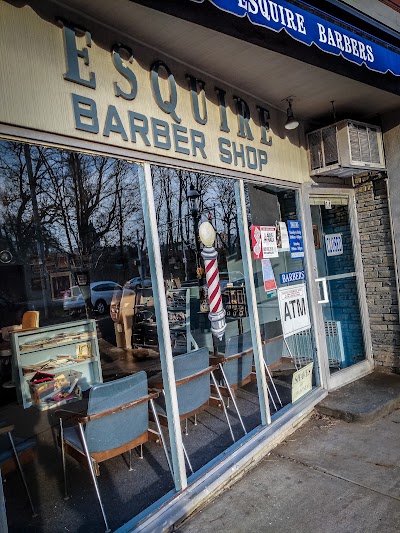
Say your real interval out loud at the appointment. At Esquire Barber Shop, classic cuts and fades are the house work, and the neckline recommendation changes honestly depending on whether you answer two weeks or five.
What a clean-up visit includes, and what it should not
A proper between-cuts clean-up is a small, defined job: the neckline is re-established along its original line, stray growth below and around the ears is cleared, and the barber checks that the shape still agrees with the cut above it. It should not become a stealth haircut. When a clean-up starts reshaping the sides or top, the cut's balance gets edited by installments, and the next full cut starts from a distorted map. If the top genuinely needs work, that is a full appointment, booked as one.

The home version, done safely
Between shop visits, the safe home move is subtraction only: a trimmer below the line the barber set, two mirrors, good light, and stopping while you are ahead. Work in daylight if you can, because bathroom light hides exactly the soft fuzz you are hunting. Never raise the line to chase a straighter look, never try to square corners blind, and never use a razor on the back of your own neck freehand; the angle invites nicks you will not feel until the collar rubs. Men who keep those rules can stretch a cycle respectably. Men who break them arrive at the shop needing a rebuild, which is the expensive version of the same lesson.
Common questions
How long does a neck clean-up take?
Usually just a few minutes. It is a small service covering the neckline and around the ears, which is why it works so well as a midpoint visit between full cuts.
Blocked or tapered neckline: which lasts longer?
Tapered lasts longer in appearance, because growth blurs it gradually with no hard edge to betray it. Blocked lines look sharper at first but show growth sooner and suit shorter cut cycles.
Can I just shave my whole neck at home with a razor?
It is risky and rarely looks even. The back of the neck is hard to see and easy to nick, and a freehand line tends to creep upward. A trimmer below the barber's line is the safe limit for home work.
Photos in this guide are representative stock images.
← All guides from Esquire Barber Shop← Back to Esquire Barber Shop